
Root Canal Treatment on the Sunshine Coast
When tooth pain keeps you awake, or your dentist has told you a tooth needs a root canal, the first instinct is often worry. At Currey & Jorgensen Dentistry in Alexandra Headland, we provide gentle root canal treatment on the Sunshine Coast to clear infection and save your natural tooth. For most people, the procedure feels much like a routine filling.
Understanding root canal treatment
Root canal treatment, a common dental procedure also known as endodontic treatment or endodontic therapy, clears infection from inside a tooth. At the centre of every tooth sits the soft pulp, which holds the nerve and small blood vessels. When decay, a deep crack, or repeated dental care lets bacteria reach the pulp, the result is inflammation, infection, and often severe tooth pain. Root canal therapy removes the infected pulp from the canals, disinfects the space, and seals it to prevent infection from returning. The outer tooth stays in place and continues to function alongside your other natural teeth.

Signs you may need a root canal
A tooth that needs root canal treatment usually makes itself known. Watch for any of these signs:
- Severe tooth pain when biting or chewing
- Sensitivity to hot or cold that lingers long after the food or drink is gone
- Swollen, tender, or darkening gums near a particular tooth
- A change in tooth colour, often a grey or yellow shade
- A pimple-like spot on the gum, which can signal an abscess
Not every infected tooth hurts, which is one reason routine check-ups and cleans matter. Left alone, an infection in the pulp spreads into surrounding bone and forms a painful abscess. Over time, that can mean bone loss and loss of the tooth. Early infected tooth treatment gives the best chance to save the natural tooth with root canal therapy rather than extraction.
What happens during a root canal at CJ Dentistry
Most root canal procedures are completed across one or two appointments of around 60 to 90 minutes each. The plan depends on which tooth is involved and how many canals it has. Front teeth typically have one canal. Molars have three or four.
Consultation and X-ray
A digital X-ray confirms the diagnosis and shows the shape of the canals. Your dentist walks you through what they can see, and what the treatment will involve, before anything begins.
Anaesthetic and cleaning the canals
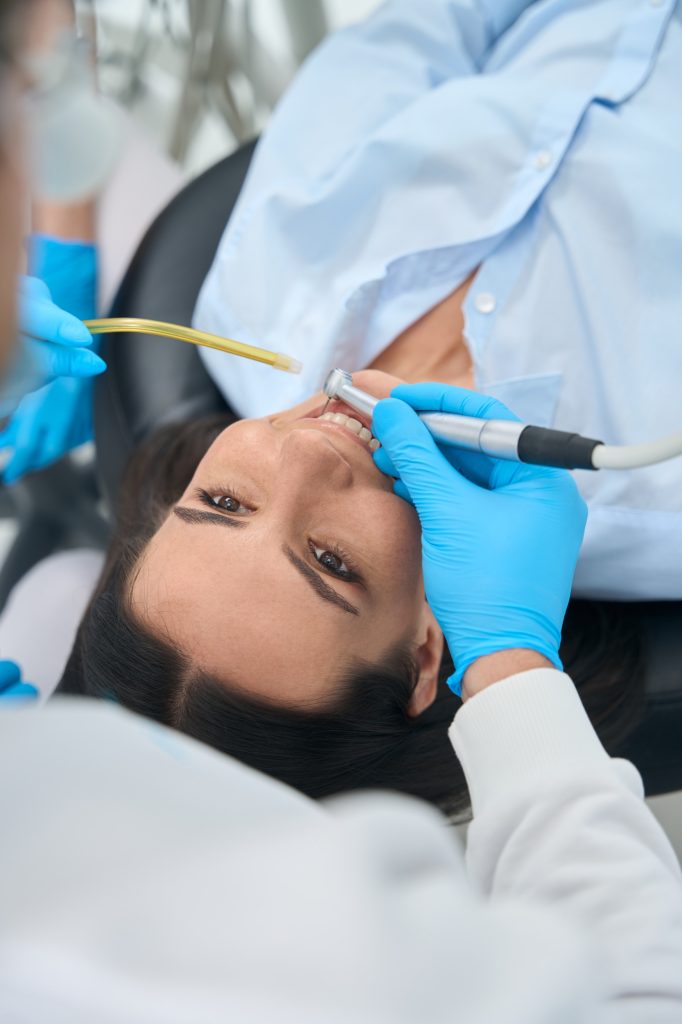
The tooth and surrounding gum are numbed with local anaesthetic. With modern technique, the root canal procedure itself usually feels no different to having a regular filling. We make a small opening through the top of the tooth, carefully remove the infected pulp, then irrigate and shape the canals.
Sealing the tooth
The cleaned canals are filled with a biocompatible material called gutta-percha, and the access hole is closed. For complex cases, we may refer to a registered endodontist for part of the treatment to give the tooth the best long-term outcome.

Recovery and why a crown is recommended
Mild tenderness for a day or two is normal and usually responds well to over-the-counter pain relief. Stick to softer foods on that side of the mouth until the final restoration is fitted. We provide written care instructions before you leave the practice.
A treated tooth has been hollowed internally to clean the canals, which leaves it more brittle than other teeth. Most root canal treatments are followed by a dental crown to protect the tooth from fracture and restore full chewing strength. With careful brushing, flossing, and regular dental check-ups, a tooth with root canal therapy and a well-fitted crown can sit happily alongside your natural teeth for many years.
Cost of root canal treatment on the Sunshine Coast
The cost of a root canal on the Sunshine Coast depends on which tooth is involved, the number of canals, and whether a crown is needed afterwards. A single-canal front tooth is more straightforward than a back tooth with three or four canals, and that is reflected in the fee. Most treatment plans cover both the endodontic treatment and the crown that protects the tooth long term.
We accept all major Australian health funds and offer on-the-spot HICAPS claiming, so any rebate is processed at the time of payment. For larger plans, the National Dental Plan offers payment options to help spread the cost. Indicative fees and what your health fund covers are walked through with you at the initial consultation.
Worried about the cost of a root canal? We’ll walk you through exactly what to expect.

Why choose CJ Dentistry for your root canal
Currey & Jorgensen Dentistry has provided dental care to Sunshine Coast families for decades. Our principal dentist, Dr Peter Jorgensen, has worked locally since 2000, and the practice has been at Alexandra Headland since 2008. We approach root canal treatment the way we approach all of your dental care: explain what is happening, take time to make you comfortable, and use modern techniques to keep the procedure straightforward. For more complex cases, we refer to registered endodontists when that is the right path for your tooth.
Frequently Asked Questions
Is a painless root canal really possible?
With modern anaesthetic, most people describe the root canal procedure as no different to a routine filling. The infection itself is usually what caused the original pain, and many notice relief soon after the affected pulp is removed. Mild tenderness for a day or two afterwards is normal. The phrase “painless root canal” reflects what modern technique has made possible, though every person’s experience can vary.
How much does a root canal cost on the Sunshine Coast?
The cost depends on which tooth is involved, how many canals it has, and whether a crown is needed afterwards. All major health funds are accepted on the spot through HICAPS, and the National Dental Plan offers payment options to spread the cost. You will receive a written quote at your consultation before any treatment goes ahead.
How long does root canal treatment take and how many appointments will I need?
Most root canal treatments are completed in one or two appointments of 60 to 90 minutes. A single-canal front tooth may finish in one visit. A molar with multiple canals usually takes two: the first cleans and disinfects the canals, the second seals them. A separate appointment for the crown is generally scheduled a few weeks later.
Do I need a crown after a root canal, and why?
In most cases, yes. Treating the tooth removes the inflamed pulp and creates an internal cavity, which makes the remaining structure more brittle and prone to fracture under normal chewing. A dental crown sits over the entire tooth, restores its strength, and helps save the tooth long term. Without a crown, a back tooth with root canal therapy is more likely to crack over time. A properly fitted crown prevents this and keeps the tooth working normally.
What happens if I leave a root canal infection untreated?
An infected pulp does not heal on its own. The infection continues through the tip of the root into surrounding bone, often forming a painful abscess. Untreated, it can lead to bone loss, sinus problems if an upper tooth is involved, and eventually loss of the tooth. Acting early gives the best chance to save the natural tooth. If a tooth is eventually lost, dental implants can replace it, though keeping your own tooth is almost always the simpler option.