
Dental Crowns on the Sunshine Coast
A dental crown is a custom-made cap that covers a damaged, cracked or heavily filled tooth and restores its strength, shape and bite. At CJ Dentistry in Alexandra Headland, we fit crowns for patients across the Sunshine Coast and colour-match each one to the teeth around it, so the repaired tooth looks and works like the others. Here is when a crown is the right call, the material choices, the process, and what it costs.
What a Dental Crown Is and How It Works
A dental crown is a tooth-shaped cover that sits over the visible part of a tooth, above the gum line. It rebuilds a tooth that has lost too much structure to be held by a filling, restoring its shape and chewing strength and protecting what is left underneath.
Once bonded on, the crown takes the daily load of biting and chewing, holding together a weak or cracked tooth that might otherwise split.
A filling and a crown solve different problems. A filling packs material into a cavity inside the tooth; a crown wraps the whole tooth. When decay or a fracture leaves too little solid tooth for a filling to hold, a crown is the better repair.

Signs You May Need a Dental Crown
A crown is not for a small problem. It comes into play when a tooth is badly weakened or at real risk of breaking. Common reasons we recommend one:
The only way to know for certain is an exam. We check the tooth, take an X-ray, and talk through whether a crown, a filling or another option suits you.
- A large old filling that keeps failing, or a tooth that is now more filling than tooth
- A cracked, chipped or fractured tooth that needs holding together
- Heavy wear from grinding, which thins and flattens a tooth over time
- A brittle tooth after root canal treatment, which a crown protects from splitting.
- Anchoring a dental bridge or finishing a dental implant with a crown on top
- Rebuilding a discoloured or misshapen tooth to match the rest of your smile
Types of Dental Crowns and Materials
Crowns are made from several materials, and the right one depends on which tooth needs it and how hard that tooth works.
- Porcelain and all-ceramic crowns give the closest colour match to a real tooth, so they suit front teeth and anywhere on show. A porcelain crown reflects light much the way enamel does.
- Porcelain-fused-to-metal (PFM) crowns pair a metal core with a porcelain outer layer, for solid strength and an appearance that still blends in.
- Zirconia crowns are a very strong ceramic that stands up to heavy chewing and grinding, which makes them a sensible pick for back teeth.
- Gold and metal-alloy crowns are the most hard-wearing and are gentle on the teeth they bite against. Because of the colour, they are usually kept for molars at the back.
Your dentist weighs up the tooth’s position, your bite, how much it shows when you smile, and your budget, then recommends a material.

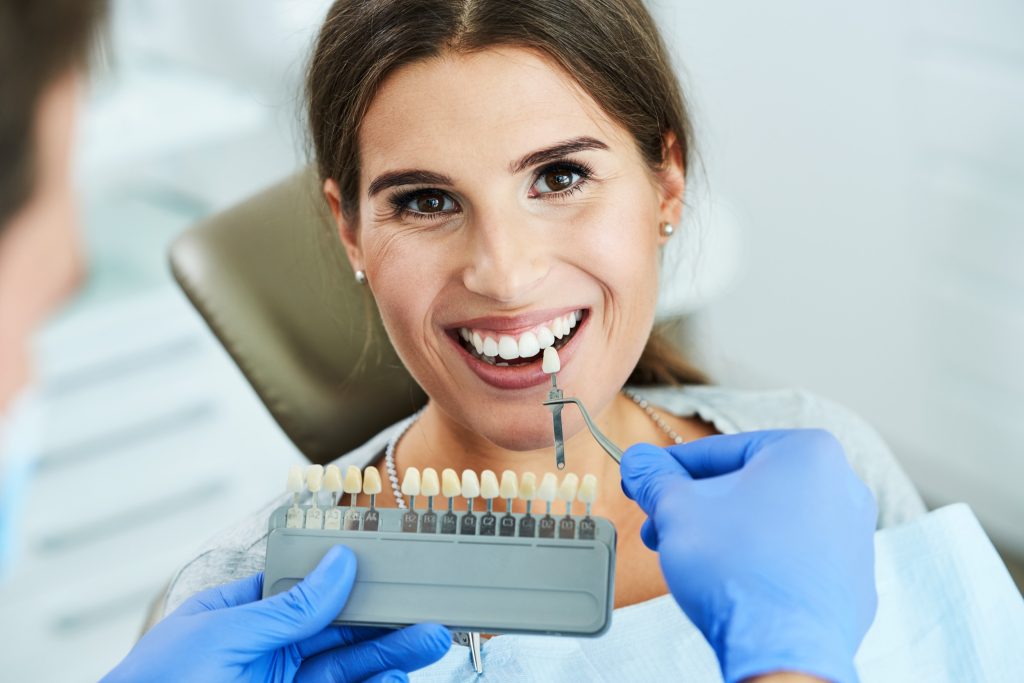
The Dental Crown Procedure, Step by Step
A standard crown takes two visits, usually a week or two apart.
Visit one: preparing the tooth
We numb the area with local anaesthetic, remove any decay or old filling, and shape the tooth. Then we take an impression or digital scan and fit a temporary crown to protect the tooth while the permanent one is made.
Visit two: fitting the crown
A dental laboratory crafts your crown to the shape and shade agreed at the first visit. We then remove the temporary crown, check the new one for fit, colour and bite, and bond it in place. The work is done under local anaesthetic, so you should not feel pain during it. Before you leave, we check in to make sure the crown feels comfortable and looks the way you hoped. Your feedback matters to us, so we will happily fine-tune the bite or talk through anything that does not feel quite right. The tooth is often sensitive for a few days afterwards, which usually settles on its own.
Crown Cost, Longevity and Aftercare
How much does a crown cost?
In Australia, a single crown usually costs between $1,200 and $2,500, depending on the material, the tooth, and whether extra work like a root canal or core build-up is needed first. Many health funds cover part through extras, and we offer payment plan options. You get a written quote after your exam, before treatment begins.
How long do crowns last?
Looked after well, a crown usually lasts 10 to 15 years, and often longer. What shortens that is what damages natural teeth too: poor cleaning, grinding, and biting down on very hard foods.
Caring for your crown
Care for a crown like your other teeth: brush twice a day, floss around it, and keep your regular check-ups so we spot wear early. A night guard helps if you grind. If it ever feels loose or comes off, keep it safe and call us.


Why Sunshine Coast Patients Choose CJ Dentistry
CJ Dentistry has cared for Sunshine Coast families for more than 20 years from our practice at Alexandra Headland. The dentists here live and work locally, so you see familiar faces rather than a rotating roster.
Principal dentist Dr Peter Jorgensen has placed crowns through to full-mouth reconstruction and trained in implant dentistry at the University of Sydney. Every crown we fit is made in a dental laboratory and colour-matched to your own teeth.
Book a crown consultation online, or call our Alexandra Headland team on (07) 5479 5522.
Contact Us
Ready to look after that tooth? Book a crown consultation at CJ Dentistry online, or call our Alexandra Headland team.
Address: 1/130 Alexandra Parade, Alexandra Headland, QLD 4572
Phone: (07) 5479 5522
Email: reception@cjdentistry.com.au
Hours: Monday – Friday, 8:00 AM – 5:00 PM
Frequently Asked Questions
How much do dental crowns cost on the Sunshine Coast?
Most single crowns in Australia fall between $1,200 and $2,500, depending on the material, the tooth, and any extra work such as a root canal. Health fund extras often cover part of it, and payment plan options are available. You get a written quote after we examine the tooth.
How long do dental crowns last?
With good care, a crown usually lasts 10 to 15 years, and many last longer. The main factors are how well you clean around it, whether you grind your teeth, and what you bite on. Regular check-ups let us catch early wear.
Is getting a dental crown painful?
The procedure is done under local anaesthetic, so you should not feel pain while the tooth is prepared and the crown fitted. The tooth may feel sensitive for a few days afterwards, which usually settles. Tell us if the bite feels off and we will adjust it.
What is the difference between a dental crown and a filling?
A filling packs material into a cavity inside a tooth. A crown covers the whole tooth like a cap. The deciding factor is how much healthy tooth is left: when too little remains for a filling to hold, a crown is the more reliable repair.
Can you get a dental crown in one day on the Sunshine Coast?
Some Sunshine Coast clinics offer same-day crowns using CEREC technology or other similar technologies that mill a ceramic crown during one appointment. CJ Dentistry takes a different approach: your crown is custom-made in a dental laboratory, so it takes more than one visit, with a temporary crown in between. Call our team on (07) 5479 5522 to ask about timing.