
Treatment Risks and Recovery
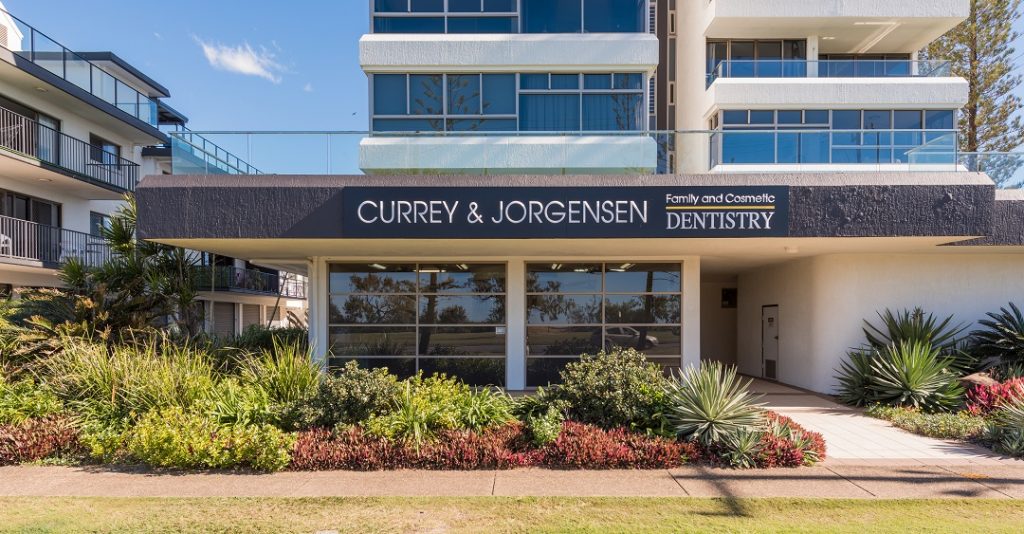
This page gives an overview of the risks, side effects and recovery involved in the dental treatments we provide at Currey & Jorgensen Dentistry in Alexandra Headland. It is not a complete list of everything that can happen, and it is not a substitute for a consultation with a registered dental practitioner or advice from your own doctor. Your individual risks, your suitability for a treatment and what all of this means for you will be discussed with your dentist before treatment begins.
Any dental treatment carries some risk. Before going ahead, we encourage patients to ask as many questions as they need and to consider the alternatives (including no treatment).
Risks that apply to every dental treatment
Some risks come with dental treatment in general rather than with one procedure. Your dentist will go through the ones that apply to you as part of the consent process.
- Local anaesthetic. Most treatment is carried out under local anaesthetic. Numbness normally lasts one to three hours. Uncommon effects include bruising at the injection site, a temporary change in sensation to the lip or tongue, and, rarely, an allergic reaction.
- Sensitivity and soreness. Teeth and gums can be tender for a few days after treatment. This usually settles on its own. If it does not, tell us.
- Infection and bleeding. Any procedure that involves the gum or bone carries a risk of infection and bleeding. Patients who take blood-thinning medication or have certain medical conditions need to tell their dentist before treatment.
- Treatment may not succeed. Fillings, crowns, root canals and implants can all fail, and a failed treatment may need to be redone, replaced or followed by a different treatment. Further treatment may carry a further cost and this will be discussed with you prior to treatment being required.
- Materials. Dental materials, implant components, whitening products and aligners are regulated therapeutic goods. Reactions to them are uncommon but possible. Tell us about any allergies you know of.
- Medical history. Diabetes, smoking, pregnancy, some medications and conditions that affect healing can change how a treatment is planned and how it turns out. An honest medical history is part of keeping treatment as predictable as it can be.
Before any treatment, your dentist will explain what is involved, the likely benefits, the material risks, the alternatives and the cost, and you will have time to ask questions. This is your decision, and it is fine to take time over it or to come back with more questions.
Risks and recovery by treatment
Check-ups, cleans and gum treatment
Routine examinations, x-rays, professional cleaning and gum (periodontal) treatment are the lowest-risk things we do, but they still carry some risk.
- Dental x-rays use a low dose of radiation. We only take them when they are needed for diagnosis, and we use protective measures. Tell us if you are or may be pregnant.
- Gums can be tender and bleed a little after a clean, particularly if there is existing gum disease. Teeth may feel sensitive to cold for a day or two.
- Professional cleaning and good home care help manage gum disease. They do not cure established periodontitis, which needs ongoing treatment and follow-up, and gum that has been lost does not grow back.
- A check-up can find problems, but no examination detects everything. Some conditions only become visible over time or on later x-rays.
Alternatives: there is no direct alternative to a professional examination, but how often you need one depends on your oral health. Read more on our dental hygiene and general dentistry pages.
Fillings
A filling removes decay and restores the tooth with a tooth-coloured resin or another material. Local anaesthetic is used to numb the area. Pressure and vibration can be expectedl, and your dentist will tell you what to expect.
- Sensitivity to hot, cold or biting is common for a few days or weeks and usually settles. Occasionally it does not, and the tooth needs further treatment such as a root canal or a crown.
- The bite may feel high after the anaesthetic wears off. If so, we can organise a short adjustment appointment to address your concerns. Please just let us know.
- Fillings do not last forever. They can chip, wear, stain at the edges or develop decay underneath, and each replacement removes a little more tooth. Larger fillings are more likely to need a crown later.
- Very deep decay may have already affected the nerve. In that case a filling alone may not be enough.
Alternatives include monitoring very early decay, an inlay or onlay, or a crown for a heavily broken-down tooth. Your dentist will explain which suits your tooth. See our dental fillings page.
Root canal treatment
Root canal treatment removes infected or dead nerve tissue from inside a tooth.
- Root canal treatment often succeeds in keeping a tooth, but no outcome can be guaranteed. Some teeth do not settle and need retreatment, surgery on the root tip or extraction later.
- Soreness on biting for several days after each visit is common.
- Root canal treated teeth are more brittle than living teeth. Most need a crown afterwards to reduce the risk of fracture, and that is an additional procedure with its own cost.
- Complex root anatomy sometimes means a canal cannot be fully cleaned, or an instrument can fracture inside the tooth. Your dentist will tell you if either happens and what it means for the tooth.
- Some teeth are better treated by a specialist endodontist. Referral to a specialist is always an option available to you, and your dentist will recommend it if that is the right choice for your tooth.
The main alternative is extraction, followed by a decision about whether and how to replace the tooth. Leaving an infected tooth untreated is also a choice, but infection can spread and cause pain, swelling and bone loss.
Tooth extraction and wisdom teeth removal
Extraction is a surgical procedure, whether it is a single tooth or the removal of wisdom teeth. Not every wisdom tooth needs removing. Monitoring is sometimes the right option, and an examination and x-rays are needed before your dentist can recommend either.
- Pain, swelling and bruising are normal for several days and can last longer after more difficult extractions. Jaw stiffness and difficulty opening wide are common for a week or so.
- Bleeding is expected on the day. Ongoing or heavy bleeding needs a phone call to us.
- Dry socket, where the clot in the socket is lost, causes pain a few days after the extraction and needs a dressing. Smoking increases the risk.
- Infection can develop in the socket and may need antibiotics or further treatment.
- Lower wisdom teeth sit close to nerves. Temporary altered sensation in the lip, chin or tongue happens in a small number of cases. In rare cases the change is lasting.
- Upper teeth sit close to the sinus. Occasionally an opening into the sinus is created and needs further care.
- Neighbouring teeth, fillings or crowns can be damaged during an extraction, and a root fragment sometimes has to be left in place if removing it would cause more harm.
- Some extractions are better referred to a specialist, and some patients choose to have them under sedation or a general anaesthetic. Not every patient is suitable for sedation.
Recovery varies between patients. Most people resume usual activity within a few days after an uncomplicated extraction and one to two weeks for impacted wisdom teeth. Read more on our wisdom teeth removal page.
Dental crowns and bridges
A crown covers a weakened or broken tooth. A bridge replaces a missing tooth by attaching a false tooth to crowns on the teeth either side. Both involve removing some healthy tooth structure, and that cannot be reversed.
- Sensitivity after preparation is common. In some teeth the nerve does not settle and root canal treatment is needed later.
- Crowns and bridges can chip, crack, loosen or come off. Porcelain can fracture. A bridge can fail if one of the supporting teeth develops decay or gum disease.
- Decay can develop at the edge of a crown where it meets the tooth, particularly if daily cleaning is not thorough. Regular check-ups are needed.
- A bridge puts extra load on the supporting teeth and means those teeth have to be prepared even if they were healthy.
- No crown or bridge lasts forever. With good care many last years, but all will need replacing at some point, and the replacement carries a further cost.
Crowns that are recommended to protect a cracked, root-filled or heavily filled tooth are clinical treatment. Crowns chosen only to change how a tooth looks are elective cosmetic treatment and the notes in the veneers section below apply to them as well.
Alternatives to a crown include a large filling, an onlay or, for a badly broken tooth, extraction. Alternatives to a bridge include a dental implant, a removable partial denture or leaving the space. Each has advantages, limitations and costs. See our dental crowns and dental bridge pages.
Dental implants
Dental implant treatment is a surgical procedure. A titanium post is placed in the jawbone, left to heal, then restored with a crown, bridge or implant-supported denture. Like any surgery it carries risks, and not every patient is a suitable candidate. Bone volume, gum health, general health and smoking all affect whether an implant is likely to succeed.
- Pain, swelling and bruising are common for several days after placement. Recovery time varies between patients.
- Implant placement is commonly performed under local anaesthesia. Your dentist will discuss anaesthesia, expected discomfort, recovery and potential risks before treatment.
- Implants can fail to integrate with the bone, either early on or years later. A failed implant has to be removed, and further procedures such as bone grafting may be needed before it can be replaced.
- Infection can develop around an implant (peri-implantitis) and cause bone loss. It is more likely in smokers and in patients with a history of gum disease, and it needs treatment.
- Nerve injury during placement in the lower jaw can cause altered sensation in the lip, chin or tongue. This is uncommon and is usually temporary, but it can be lasting.
- Upper implants can involve the sinus, and some patients need a sinus lift or bone graft first. Grafts add time, cost and their own risks.
- The crown or bridge on top of an implant can chip, loosen or need replacing over time. Screws can loosen and components can fracture.
- Planning software and 3D imaging are used to plan implant position. Planning reduces some risks but does not guarantee the outcome.
Implants transfer chewing load to the jawbone, which can help slow bone loss in that area. Bridges and dentures replace the visible tooth but do not do this. For some patients, implant-supported restorations may improve stability for eating and speaking compared with an unstable denture. Each option has advantages, limitations and costs that your dentist will explain, and dentures and bridges remain suitable choices for many patients.
Implants need the same daily care as natural teeth plus regular professional check-ups. Maintenance, replacement of components and treatment of gum problems around implants carry costs beyond the initial fee. Read more on our dental implants page.
Teeth whitening
Whitening is an elective cosmetic procedure for adults. It lifts staining from food, drink, smoking and age. It does not change the colour of veneers, crowns or fillings, and it does not treat discolouration that comes from inside the tooth. Results vary between patients depending on the natural shade of the teeth, the condition of the enamel and existing dental work.
- Tooth sensitivity during and after whitening is the most common side effect. It usually settles within a few days but can be significant for some patients.
- Gum and lip irritation can occur where the whitening gel contacts soft tissue.
- Results can be uneven, particularly where teeth have white spots, bands or existing restorations, which may become more noticeable.
- Whitening results do not last indefinitely. Colour returns over time depending on diet and habits, and some patients notice fading within months. Top-up treatments carry an additional cost.
- Rarely, patients react to the whitening ingredients.
Whitening may not be suitable for patients who are pregnant or breastfeeding, under 18, have untreated decay or gum disease, have very sensitive teeth or have allergies to the product ingredients. A dental examination is needed before whitening so that suitability can be assessed and the approach tailored to you. Alternatives include no treatment, replacing discoloured fillings, or (for some situations) veneers or crowns, which carry their own risks described below. See our teeth whitening page.
Veneers
Dental veneers are an elective treatment for adults, and they are a long-term commitment. Some adults enquire about veneers in relation to tooth colour, shape, spacing, minor alignment or tooth wear. These features are often normal variations, and no treatment is always one of the options.
- Preparing a tooth for a porcelain veneer usually removes enamel. That change cannot be reversed, and the tooth will always need a veneer or crown from that point on. Composite veneers may need less or no preparation but have their own limitations.
- Sensitivity after preparation is common. In a small number of teeth the nerve does not recover and root canal treatment is needed.
- Veneers can chip, crack, stain at the edges or come off. Porcelain is translucent and stain resistant; composite is more opaque and can discolour over time. Both are shade matched to your neighbouring teeth at the planning stage, and results vary between patients.
- Veneers change how a tooth looks. They do not straighten teeth. Where there is more significant misalignment, orthodontic treatment such as clear aligners may be the more suitable option.
- Veneers do not last a lifetime. With good care porcelain veneers commonly last many years, but they will need replacing, and each replacement carries a further cost and may involve more tooth reduction.
- Patients who grind or clench their teeth are at higher risk of fracture and may need a night guard.
Your dentist will discuss the relative advantages, limitations, costs and expected longevity of each option based on your individual circumstances. We do not use digital smile previews or simulations in our advertising. See our veneers page for how treatment is planned.
Clear aligners
Clear aligners move teeth using a series of removable trays. Not every case is suitable for aligners alone. Age alone does not determine suitability. Your dentist will assess your oral health, periodontal condition and other factors first, and some cases are better treated by a specialist orthodontist.
- Aligners are worn 20 to 22 hours a day and removed for eating and cleaning. Treatment time depends on the complexity of the case and how consistently the aligners are worn.
- Tooth-coloured attachments bonded to the teeth are usually needed and are visible. Speech can be affected for the first few days after each new tray.
- Pressure and tenderness are normal when each new tray is fitted. Gum irritation and dry mouth can occur.
- Moving teeth can shorten roots (root resorption). This is usually minor but is unpredictable and cannot be reversed. It can also uncover or worsen gum recession.
- The digital plan shows the intended tooth movement. It is a planning tool, not a guarantee of the final result, which depends on your biology and how the aligners are worn. Refinement trays are sometimes needed.
- Teeth move throughout life. Retainers are needed long term after treatment to hold the new position, and retainers, replacements and follow-up appointments carry costs beyond the initial fee.
- Aligner systems are regulated therapeutic goods and any named brand is a registered trade mark of its manufacturer. We are an independent practice and are not affiliated with or endorsed by any manufacturer.
Alternatives include fixed braces, referral to a specialist orthodontist, or no treatment. See our clear aligners page.
Children's dentistry and mouthguards
Children’s treatment carries the same general risks described at the top of this page. A few points are specific to younger patients.
- Children can be anxious about treatment, and we work at a pace that suits them. Some treatment may need to be staged over more than one visit.
- Fissure sealants and fluoride treatments reduce the risk of decay but do not prevent it entirely, and sealants can chip or wear and need checking at each visit.
- Baby teeth that are extracted early can affect the space available for adult teeth, and a space maintainer is sometimes recommended.
- A custom mouthguard is designed to reduce the risk of dental injury. No mouthguard prevents all injuries, and it needs to be worn as directed and replaced when it no longer fits or when a child’s teeth change.
- We do not provide cosmetic treatment such as whitening, veneers or aligners chosen to change how teeth look to patients under 18.
Read more on our children’s dentist and custom mouthguards pages.
About this page
The information on this page is general in nature and is intended for adults. It is not medical advice and it is not a guarantee of any particular outcome. Results vary from patient to patient, and every dental procedure carries both risks and benefits. Some treatments described here, such as veneers, are higher-risk cosmetic procedures. A full examination and consultation with one of our dentists is needed to work out what is right for you.