
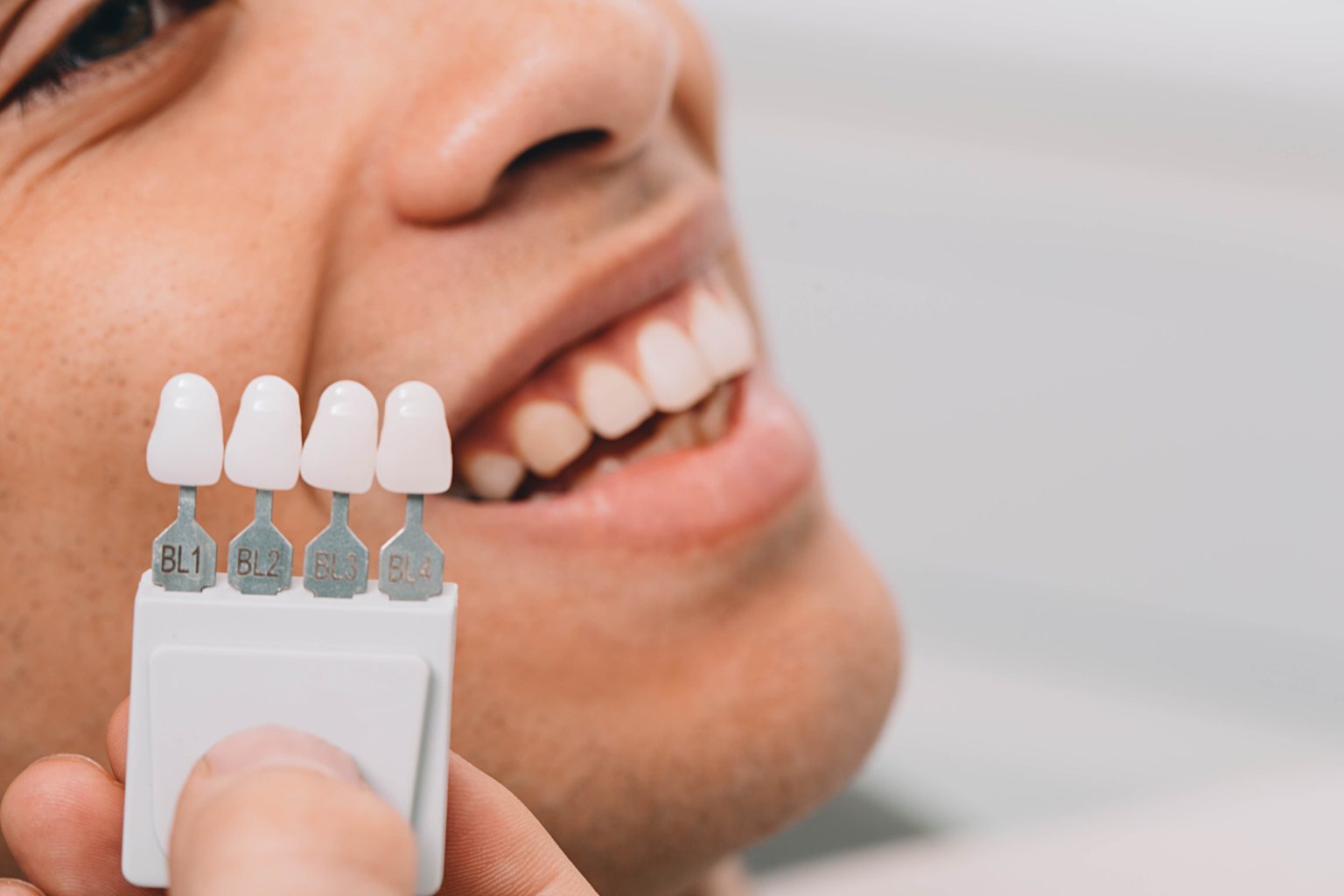
The difference between veneers and crowns comes down to coverage. A veneer is a thin porcelain or composite shell bonded to the front surface of a tooth to change its colour, shape or alignment. A crown is a full cap that covers the entire tooth down to the gum line, restoring strength as well as appearance. Veneers are chiefly cosmetic; crowns are chiefly structural.
That single distinction settles most cases, but the deciding factor isn’t which result you prefer, it’s how much healthy tooth is left underneath. Here’s how the two compare on preparation, strength, lifespan and cost, and how dentists actually choose between them.
What a Veneer Does
A veneer covers only the visible front face of a tooth, usually one of the upper front teeth that show when you smile. It’s the tool for cosmetic problems on structurally sound teeth: deep staining that whitening can’t shift, chips, small gaps, worn edges, or one tooth that never matched its neighbours.
Preparation is conservative. A thin layer of enamel, often less than a millimetre, is removed from the front surface so the veneer sits flush. Porcelain veneers are made in a laboratory over two visits; composite veneers can be sculpted directly onto the tooth in one. Because the rest of the tooth is untouched, veneers preserve more natural structure than any full-coverage option.
What a Crown Does
A crown wraps the whole tooth: front, back, sides and biting surface. That full coverage is what lets it hold together a tooth that’s cracked, heavily filled, broken down by decay, or brittle after root canal therapy. It takes the biting force that would otherwise split what’s left of the natural tooth.
The trade-off is preparation. The tooth is reshaped all the way around to make room, which removes more structure than a veneer. That’s also why dentists don’t crown teeth for purely cosmetic reasons when a veneer would do; you don’t give up healthy enamel without a structural reason.
Veneers vs Crowns Side by Side
- Coverage: veneer covers the front surface; crown covers the entire tooth.
- Purpose: veneer changes appearance; crown restores strength and appearance together.
- Tooth preparation: veneer removes a thin front layer of enamel; crown reshapes the whole tooth.
- Strength: crowns handle biting forces on damaged or back teeth; veneers rely on the tooth behind them being sound.
- Typical lifespan: both commonly last around 10 to 15 years with good care, though this varies with grinding habits, gum health and diet.
- Cost: porcelain veneers and crowns sit in a similar range per tooth; composite veneers cost less. Your written quote confirms the figure for your tooth.
How Dentists Choose Between a Crown and a Veneer
The examination answers three questions. How much sound tooth structure remains? A tooth that’s mostly filling material can’t reliably hold a veneer. Does the tooth take heavy load? Molars and grinding habits push the decision towards crowns. And is the goal cosmetic, structural or both? A discoloured but intact front tooth says veneer; the same tooth with a large old filling and a crack line says crown.
Sometimes the honest answer is a mix: crowns on the damaged teeth and veneers on their healthy neighbours, matched in shade so the smile reads as one. And occasionally the answer is neither; whitening or bonding solves the problem for less. A dentist who examines the teeth, rather than a price list, is the only reliable way to know.
What Treatment Involves at CJ Dentistry
Both treatments typically run over two visits at our Alexandra Headland practice: preparation and impressions or scans first, then fitting and bonding once the final restoration is back from the laboratory, with a temporary protecting the tooth in between. Local anaesthetic keeps preparation comfortable, and shade matching is done against your natural teeth in daylight-balanced conditions.
As with any dental treatment there are limits and trade-offs: prepared teeth can be sensitive for a time, veneers can chip under grinding, and crowned teeth still need cleaning at the gum line. We cover the specifics for your tooth, along with a written quote, before you commit to anything.
Frequently Asked Questions
Is a crown or a veneer better for a front tooth?
It depends on the tooth’s condition, not its position. A structurally healthy front tooth that needs a colour or shape change is usually better served by a veneer, which preserves more enamel. A front tooth that’s cracked, root canal treated or mostly filling needs a crown’s full coverage. An examination settles it quickly.
Do veneers ruin your natural teeth?
No, but they do commit them. A thin layer of enamel is removed so the veneer sits flush, which means the tooth will always need a veneer or similar restoration afterwards. On a sound tooth prepared conservatively, that trade is modest, and far less than the reshaping a crown involves.
Which lasts longer, veneers or crowns?
Their lifespans are broadly similar: commonly around 10 to 15 years, sometimes longer with good care. What shortens either is the same list: grinding without a night guard, gum disease, decay at the margins and chewing ice. The underlying tooth and your habits matter more than the choice between the two.
Can you whiten veneers or crowns?
No. Porcelain and composite don’t respond to whitening gels, which is why shade is decided before treatment. If you’re planning to whiten your natural teeth, do it first, then match the veneer or crown to the new shade. Existing restorations that no longer match can be replaced to suit.
What’s the difference between crowns and veneers in cost?
Porcelain veneers and crowns generally sit in a similar per-tooth range, while composite veneers cost noticeably less. The full picture depends on materials, the number of teeth and any groundwork like fillings or root canal therapy first, so CJ Dentistry provides a written itemised quote after your examination rather than a generic figure.
About the Author
Dr Peter Jorgensen, BDSc, Grad Dip Clin Dent (Oral Implants), Principal Dentist
Dr Peter Jorgensen is the principal dentist at Currey & Jorgensen Dentistry (CJ Dentistry) in Alexandra Headland. He earned his Bachelor of Dental Science from the University of Queensland in 1995, followed by a Graduate Diploma in Clinical Dentistry (Oral Implants) from the University of Sydney, with a focus on implant dentistry, oral surgery and complex restorative work. He handles implant cases from surgery through to the final restoration, so patients get continuity of care from start to finish.
Peter has called the Sunshine Coast home since 2000 and has a soft spot for intricate crown and bridge work that suits his perfectionist streak. He’s easy to chat with and loves building lasting relationships with patients and their families. He also gives back to the profession as a University of Sydney student mentor, a member of the Australian Osseointegration Society, a board member with the Australian Dental Association Queensland, and a fellow of the Pierre Fauchard Academy.