
Invisalign vs Braces: Which Should You Choose?
The braces vs Invisalign question is really a question about your teeth, your budget and your habits. For mild to moderate alignment problems, published clinical evidence shows the two approaches produce comparable results, and Australian pricing for both now sits in a similar band, typically $6,000 to $8,000 for a moderate case. So the decision usually turns on three practical things: how complex your case is, how visible you are willing to be during treatment, and whether you will reliably wear a removable appliance 20 to 22 hours a day.
One clarification before we compare. Invisalign is a brand of clear aligner, not the only one. At our practice we provide clear aligner treatment using both the Invisalign and Spark systems, which work the same way. Everything below about aligners applies to both.
How each treatment moves your teeth
Braces bond a bracket to each tooth and connect them with an archwire that your provider adjusts every four to six weeks. The system applies continuous force and gives the clinician fine mechanical control, which is exactly what complex movements need. The trade-offs: they are visible, they are fixed in place for the whole treatment, and cleaning around brackets takes real effort.
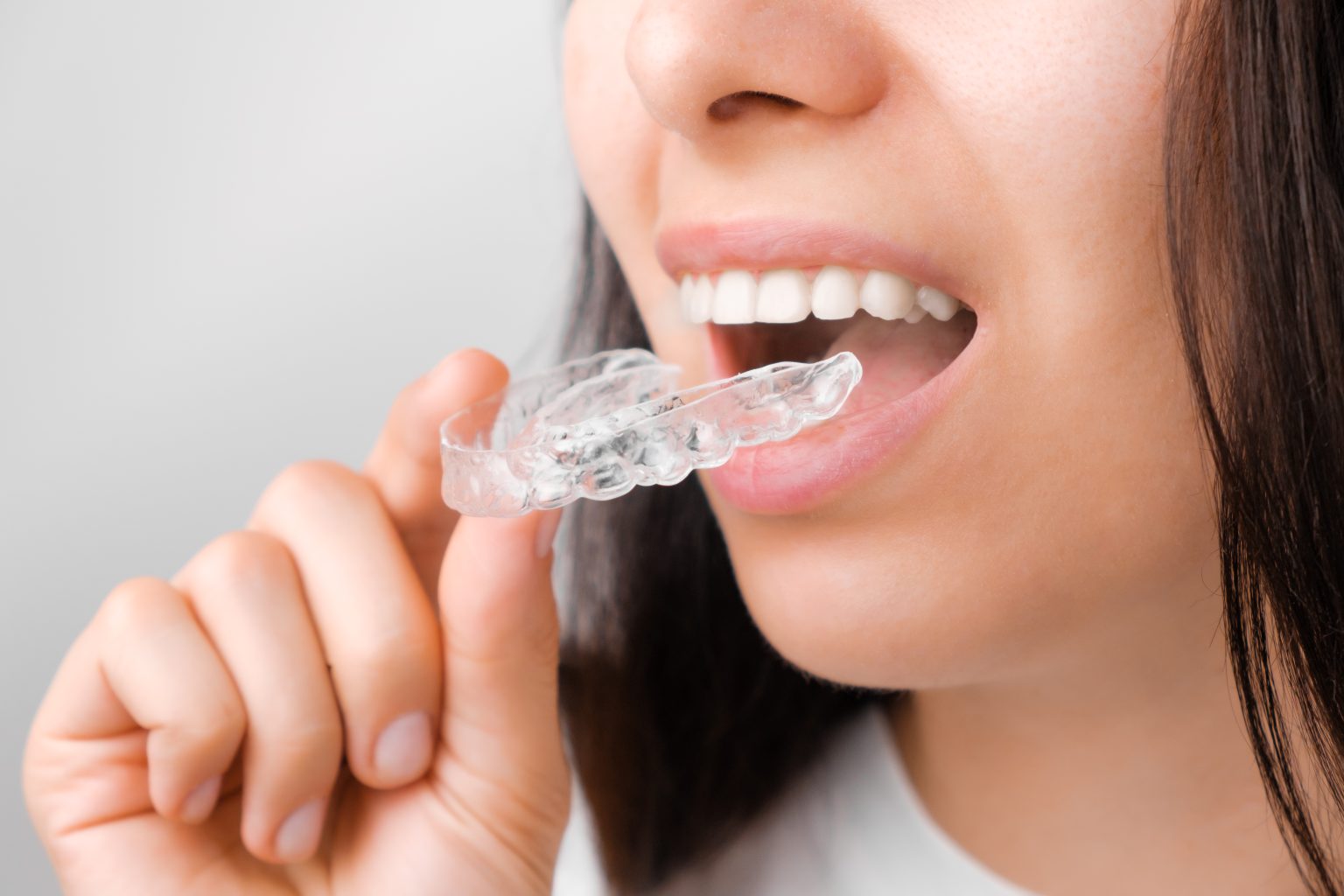
Clear aligners move teeth with a sequence of custom plastic trays, each worn for one to two weeks, planned digitally from a 3D scan before treatment begins. You can see the projected end position before you commit. The trays come out for meals and brushing, which is their biggest lifestyle advantage and their biggest risk: the plan only works if the trays are actually in your mouth 20 to 22 hours a day.
Invisalign vs braces cost in Australia
The old assumption that aligners cost thousands more than braces is largely out of date. Current Australian guides put both at roughly $6,000 to $8,000 for a moderate case, with the gap now driven more by case complexity than by the appliance.
- Traditional metal braces: commonly $6,000 to $9,000 for full treatment
- Ceramic (tooth-coloured) braces: around $7,000 to $11,000
- Clear aligners, minor cases (single arch or short tray series): from roughly $3,500 to $5,500
- Clear aligners, full treatment of both arches: typically $7,000 to $9,000
When you compare braces vs invisalign cost quotes, check what is included. Retainers (roughly $300 to $800 if charged separately), refinement trays, and review appointments are sometimes itemised rather than bundled. Two quotes that look $1,000 apart can be identical once you line up the inclusions. Health fund extras policies with orthodontic cover contribute to either option, subject to annual and lifetime limits.
How long does Invisalign take vs braces?
For mild to moderate cases, aligner treatment typically runs 12 to 18 months and can finish 3 to 6 months sooner than braces, helped by digital planning that maps every movement in advance. Braces usually take 18 to 24 months, and complex cases of either kind can run longer, occasionally up to three years with braces.
Braces work around the clock whether you think about them or not. Aligners left in their case on the kitchen bench move nothing. If you know yourself to be a serial misplacer of things, that self-knowledge belongs in the decision.
Appointment load differs too. Aligner reviews run every six to eight weeks and tend to be short. Braces need adjustment every four to six weeks, plus occasional unscheduled visits for a broken bracket or poking wire. Over 18 months, that adds up to noticeably more chair time.
Comfort, eating and cleaning
Both options ache for a day or two after each adjustment or tray change; that pressure is teeth moving. Beyond that, aligners are smooth plastic with no wires to rub or snap, and most patients find them the more comfortable option day to day.
Eating is where the difference is starkest. Braces come with a genuine banned list: nothing hard, sticky or chewy for the duration, so popcorn, minties and whole apples are off the menu. Aligners have no food restrictions at all because they come out for meals, though every snack means brushing before the trays go back in.
Cleaning follows the same pattern. With aligners you brush and floss normally. With braces you work around brackets with interdental brushes and floss threaders, and lapses show up as decalcification marks when the brackets come off. Whichever you choose, gum health has to be sorted before treatment starts.
Braces vs Invisalign: which wins for your case?
Our honest read of the evidence and our clinical experience: for mild to moderate crowding, spacing and minor bite issues in an adult or a reliable teen, clear aligners are the better everyday experience with equivalent results, and that is what we would recommend first. A 2020 systematic review in the Journal of Dental Research found no significant difference in alignment outcomes for mild to moderate cases.
For severe crowding, large rotations, significant vertical movements or extraction-based treatment, fixed braces under a specialist orthodontist remain the stronger tool, and pretending otherwise wastes your money and time. If that is your case, we will say so at the consultation and point you to the right specialist.
The deciding step is a scan and an assessment of your actual teeth. Bring your questions and we will map both paths for you.
Frequently Asked Questions
Is Invisalign cheaper than braces?
For simple cases, often slightly: minor aligner treatments start around $3,500 to $4,500, below the usual entry price for braces. For moderate cases the two now cost about the same in Australia, roughly $6,000 to $8,000. For very complex cases, braces can be the more cost-effective route because they may finish the job without extended refinements.
Do aligners work as well as braces?
For mild to moderate crowding, spacing and minor bite problems, yes: published clinical research shows comparable outcomes. Braces keep the edge for complex corrections, severe rotations and cases needing extractions, where their continuous, clinician-controlled force is more predictable. Suitability is a clinical call made from a scan, not a preference.
Can teenagers use clear aligners, or are braces safer?
Teens can do very well with aligners if they wear them. The honest test: if your teenager can wear a retainer-style tray consistently for a week without reminders, aligners are workable. If trays keep ending up in lunchboxes and bins, braces remove the compliance risk entirely. Neither answer is wrong; they are different tools.
Do I have to wear a retainer after Invisalign or braces?
Yes, after both. Teeth drift back toward their old positions once active treatment ends, and skipping retainers is the most common reason results relapse. Expect a period of full-time wear, then nights indefinitely. Ask whether retainers are included in your quote, as some clinics charge them separately at $300 to $800.
Does CJ Dentistry do Invisalign or braces?
We provide clear aligner treatment using both Invisalign and the Spark system at our Alexandra Headland practice, planned from a 3D digital scan with reviews every six to eight weeks. We do not fit traditional braces; where fixed braces or specialist orthodontics are the better option for your case, we will tell you and refer you to a specialist.
About the Author
Dr Peter Jorgensen, BDSc, Grad Dip Clin Dent (Oral Implants), Principal Dentist
Dr Peter Jorgensen is the principal dentist at Currey & Jorgensen Dentistry (CJ Dentistry) in Alexandra Headland. He earned his Bachelor of Dental Science from the University of Queensland in 1995, followed by a Graduate Diploma in Clinical Dentistry (Oral Implants) from the University of Sydney, with a focus on implant dentistry, oral surgery and complex restorative work. He handles implant cases from surgery through to the final restoration, so patients get continuity of care from start to finish.
Peter has called the Sunshine Coast home since 2000 and has a soft spot for intricate crown and bridge work that suits his perfectionist streak. He’s easy to chat with and loves building lasting relationships with patients and their families. He also gives back to the profession as a University of Sydney student mentor, a member of the Australian Osseointegration Society, a board member with the Australian Dental Association Queensland, and a fellow of the Pierre Fauchard Academy.